

Visto
Ad Platform
Visto was an all-in-1 solution that unifies the programmatic ecosystem and identifies the most efficient and effective path to ad delivery. View Product
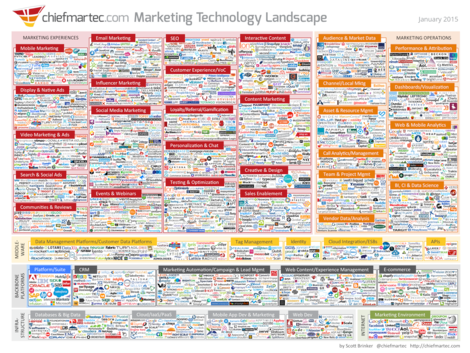
In the highly competitive digital ad space, Ad Ops often need over 18 credentials to trade and serve ads for their clients. Visto aims to address this challenge by consolidating the primary buying platforms and offering real-time performance reporting, thereby streamlining the process for Ad Ops.
As an integral part of the inaugural design team, it was my responsibility to delineate the complete user experience. I was actively engaged in the generation of ideas and the design of solutions that laid the essential groundwork for the realization of this ambitious endeavor.
Ad creation workflow
Challenges:
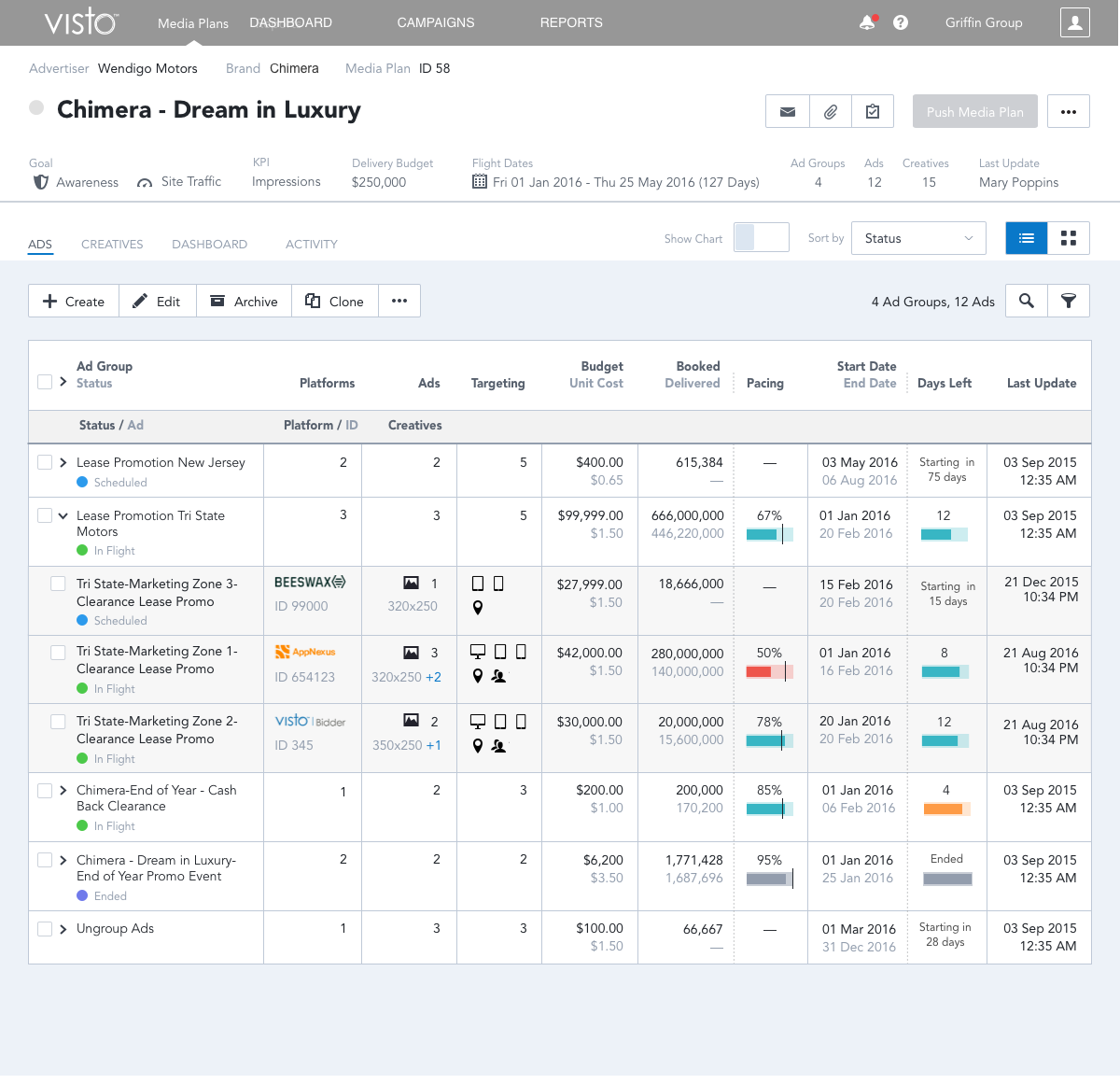
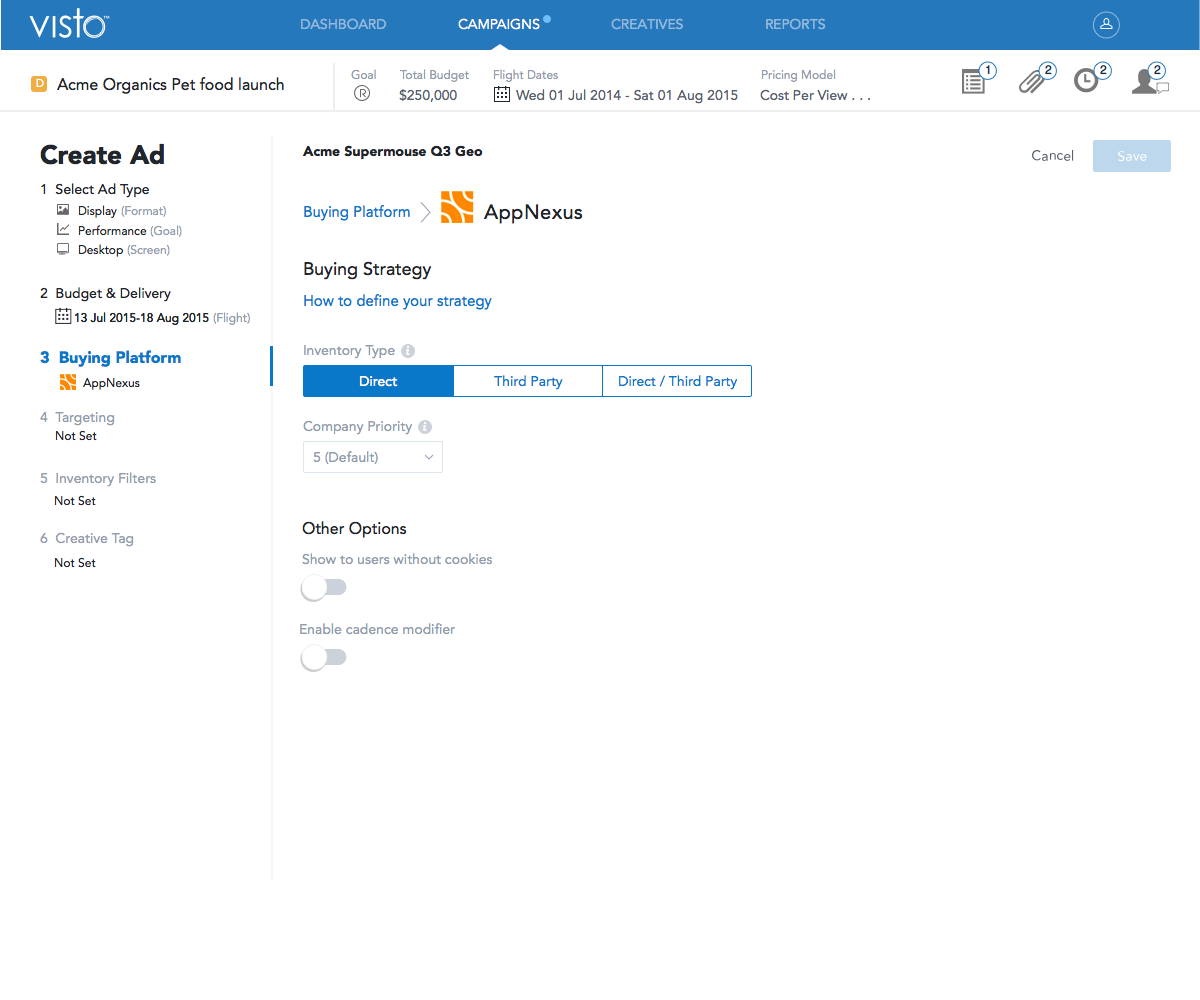
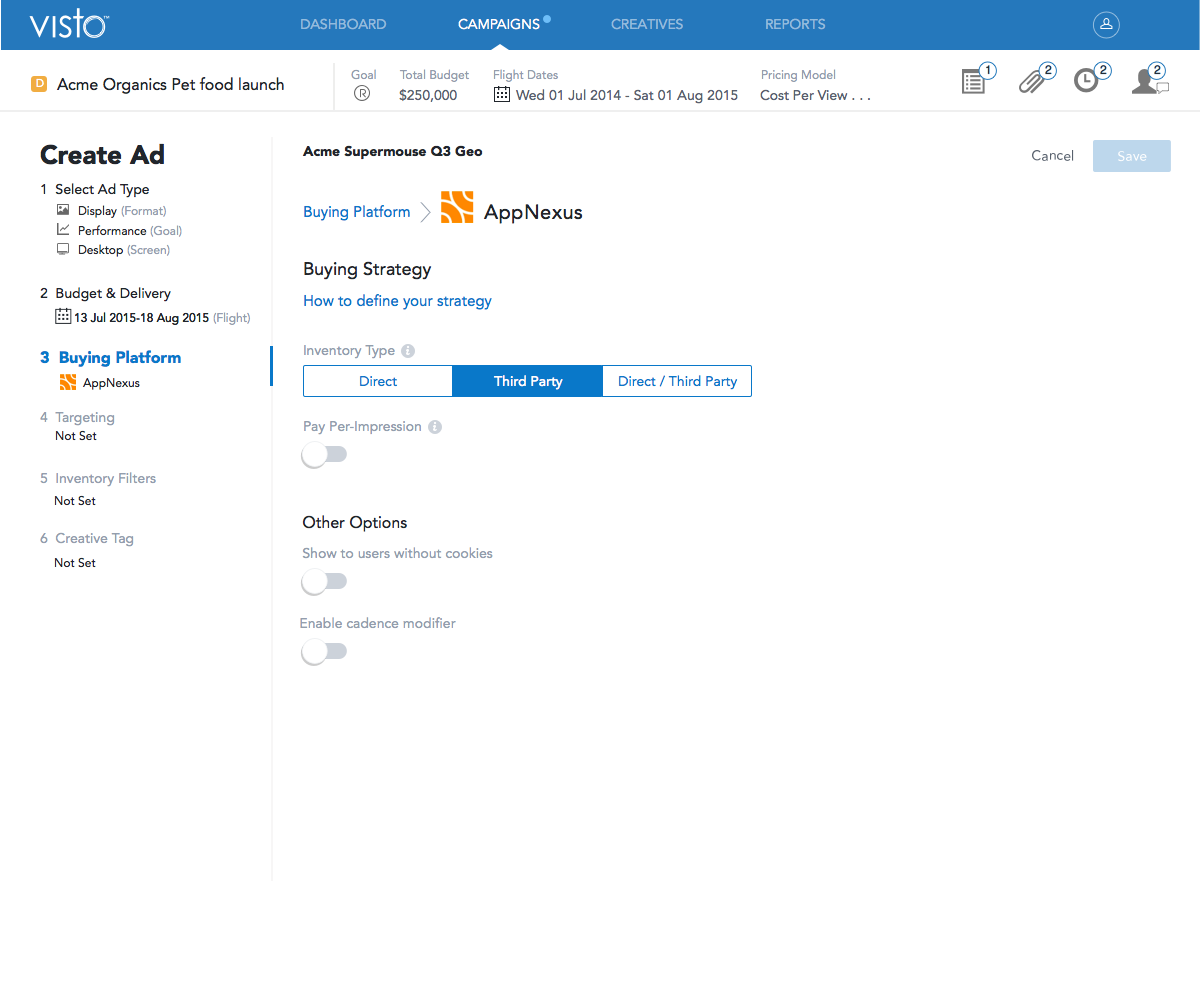
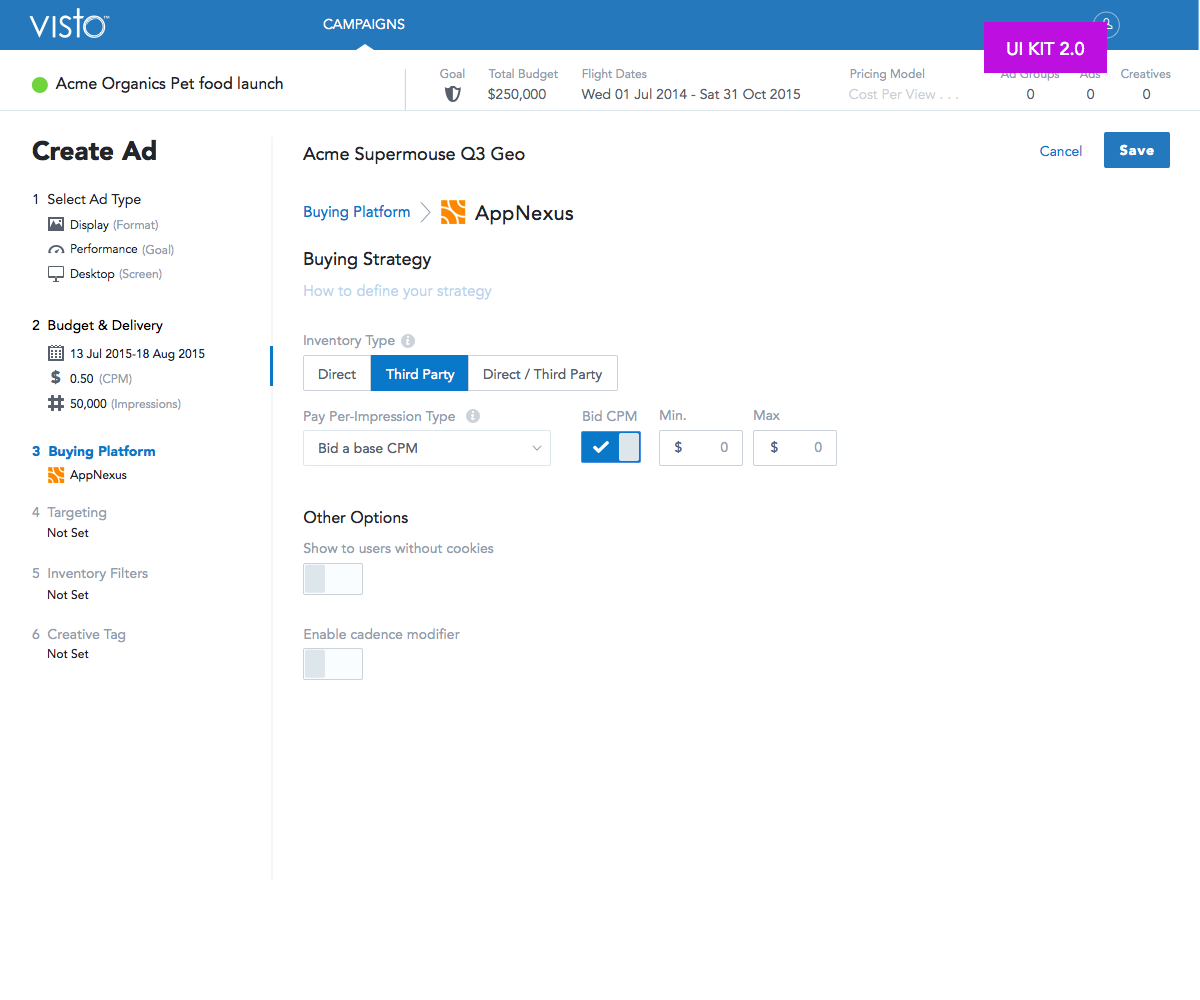
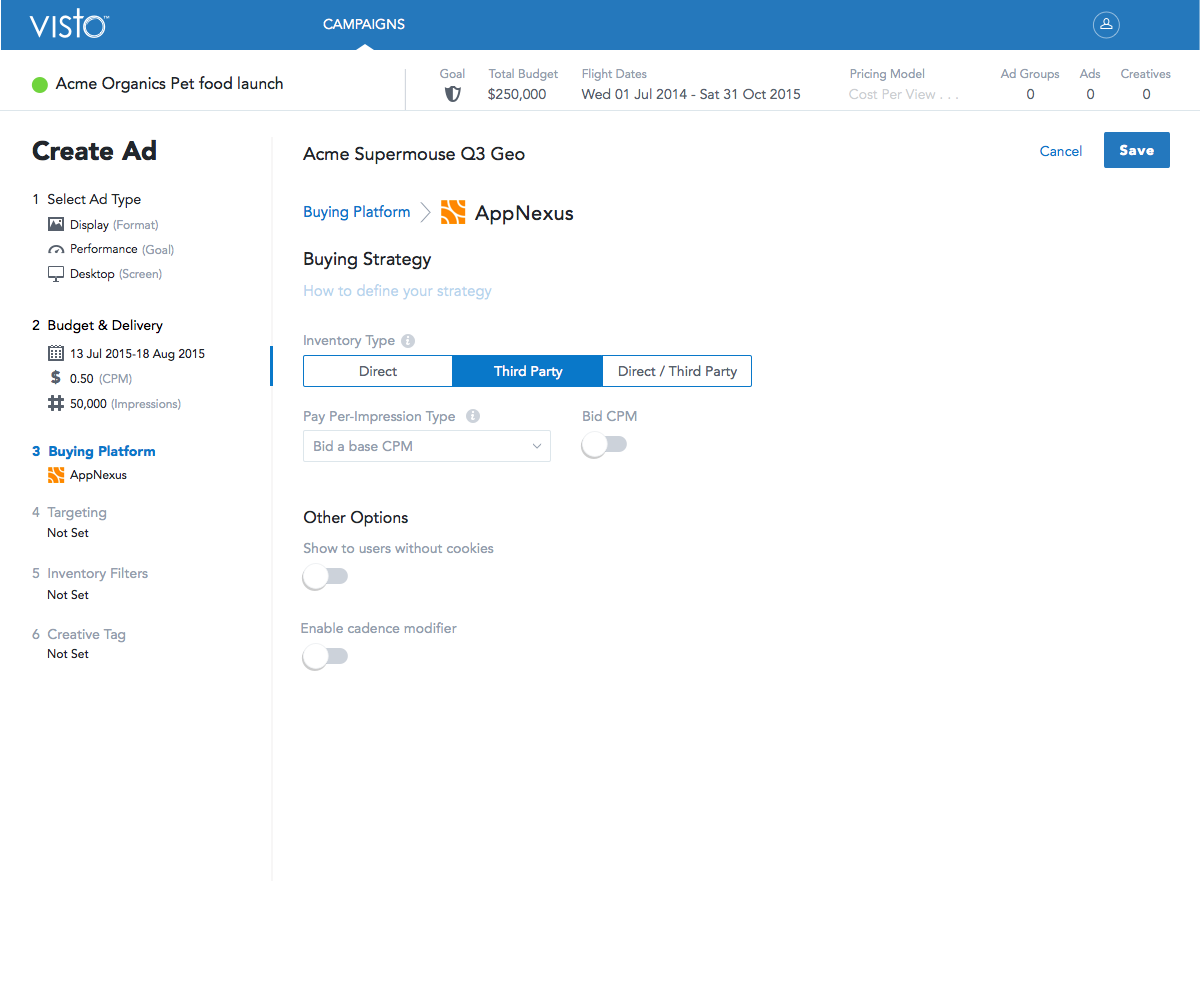
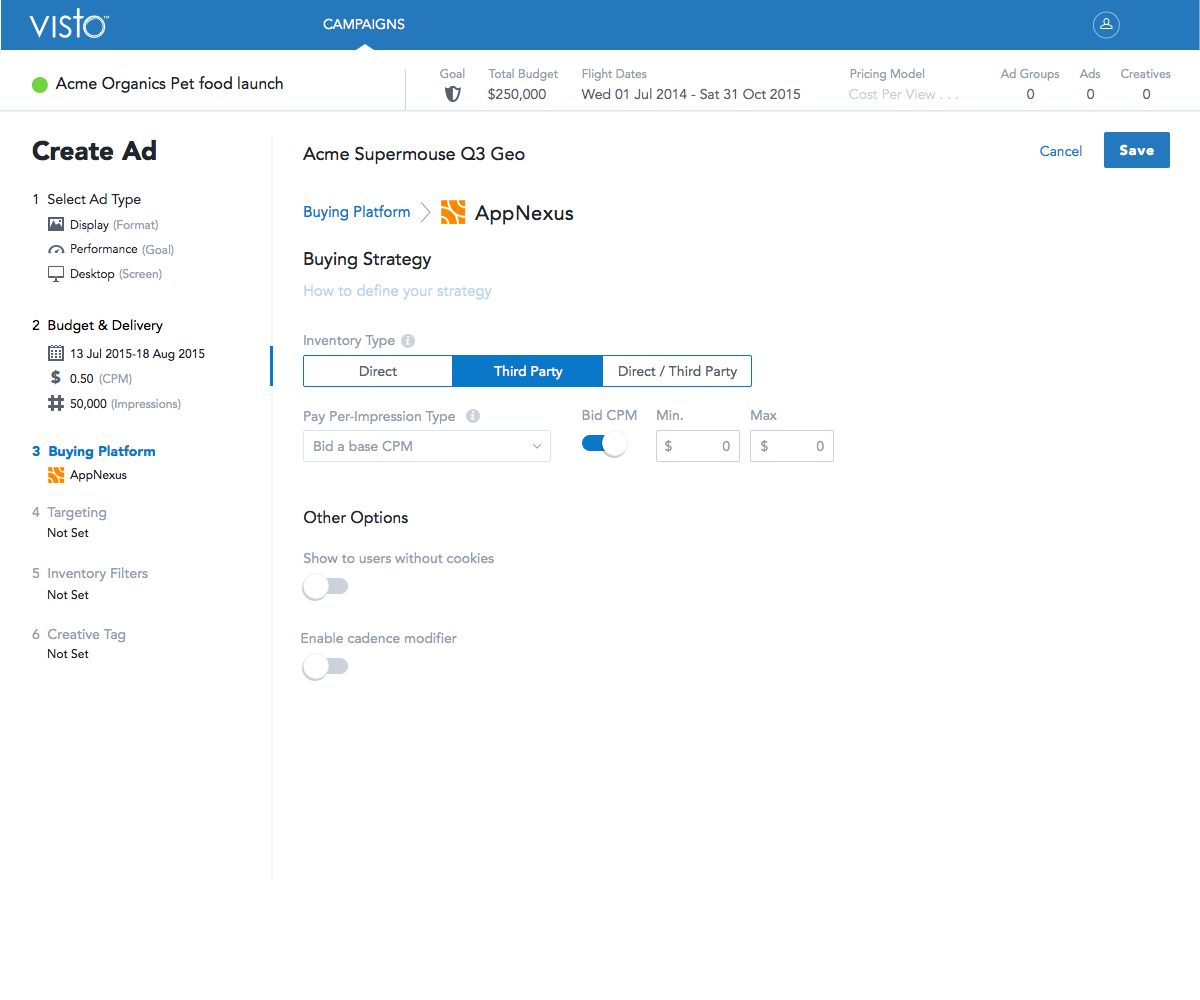
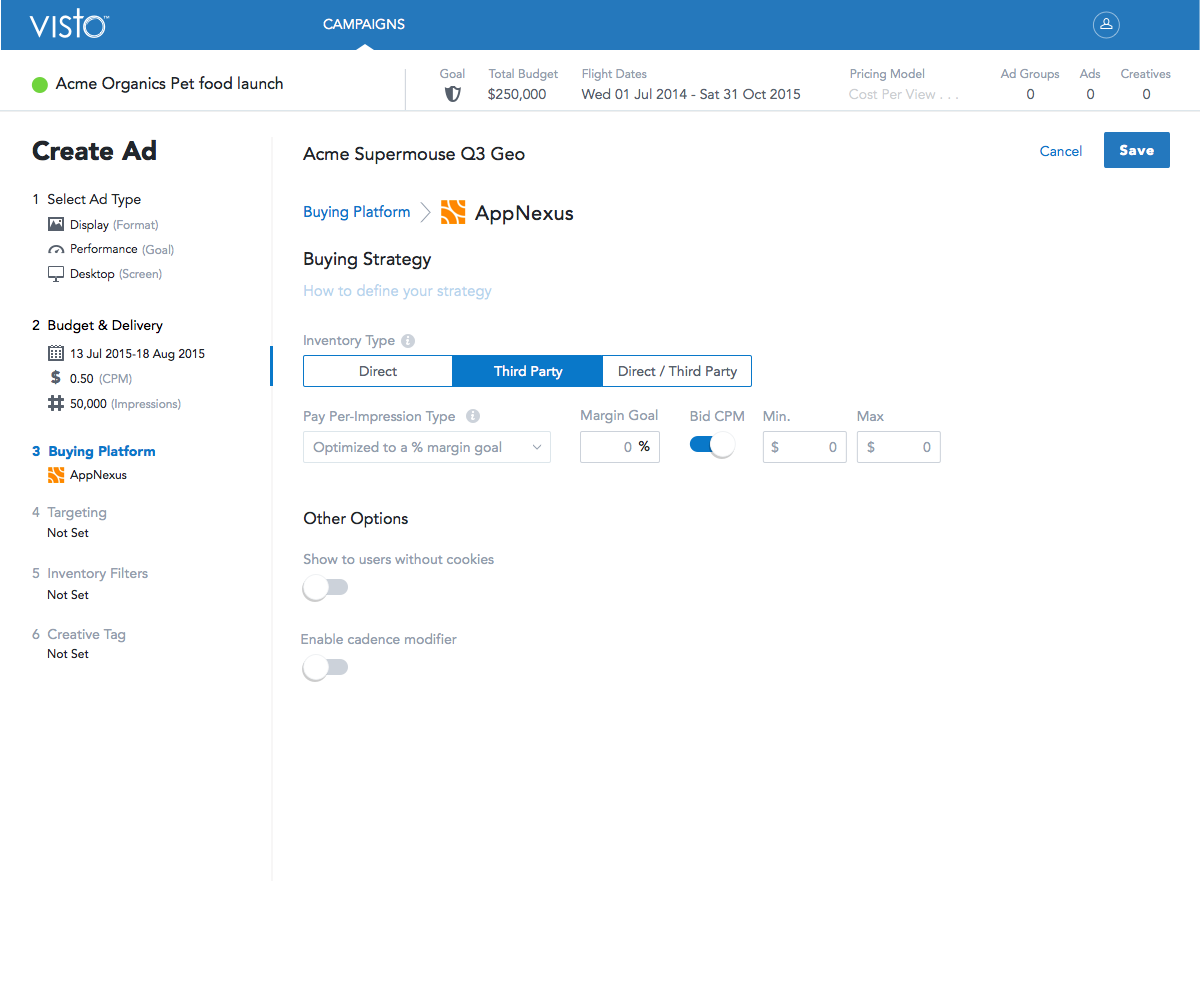
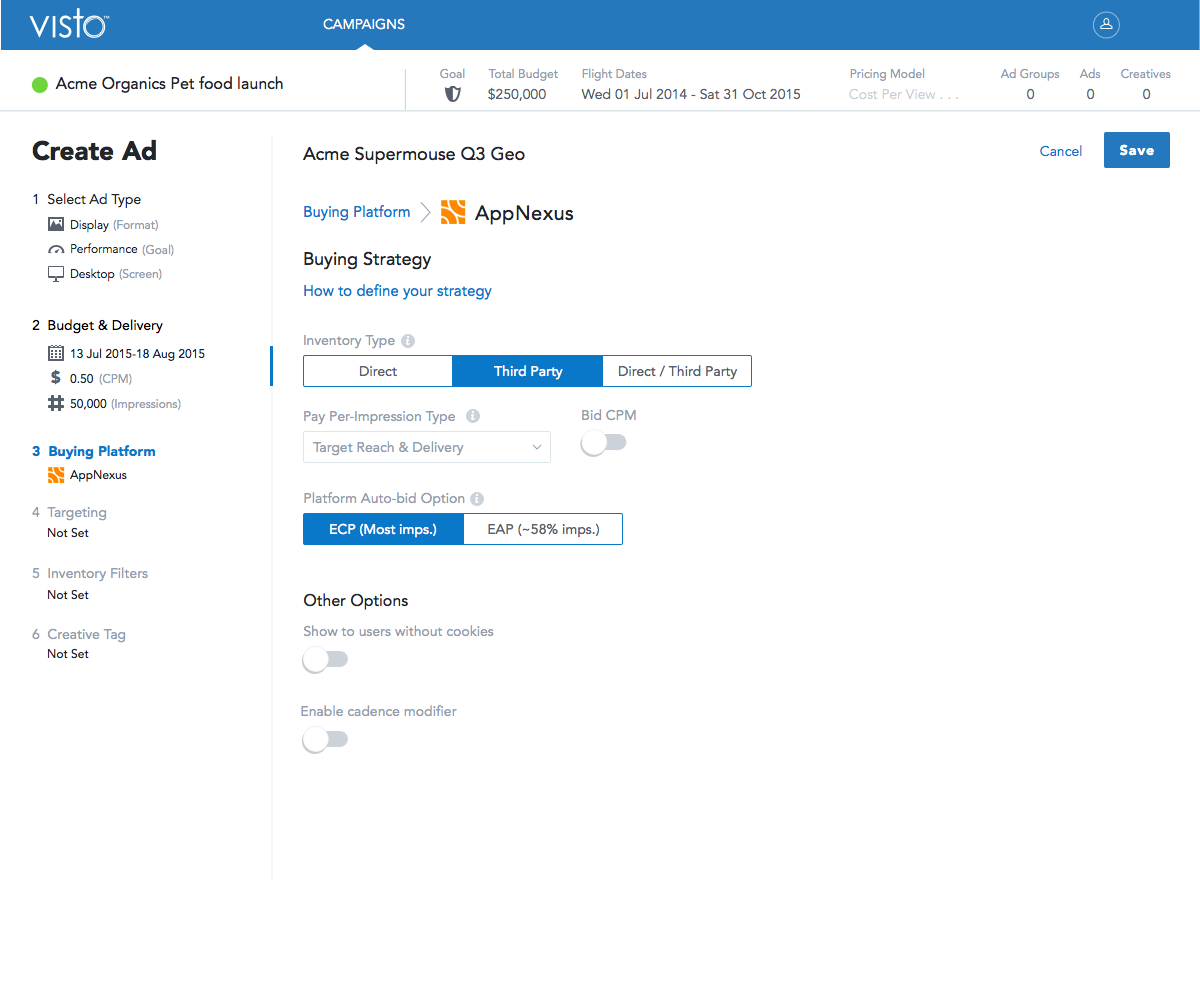
The project faces several challenges, such as the fact that ad creation can vary significantly between different buying platforms and the complex and technical jargon that often accompanies platform configurations.
To address this challenge, we needed to unify and simplify the experience by identifying the most common requirements and designing an interface that was intuitive and easy to use. This would involve streamlining the process of ad creation while ensuring that users could quickly locate and access any platform-specific settings they needed. For example —
– How would we unify & simplify the experience with the most common requirements?
– How would we ensure users can locate the platform-specific custom settings if they need to?
CREATIVE LIBRARY
Challenges:
The management of ad assets is a challenge due to the diverse requirements of each platform, which can cause significant friction for users.
To alleviate this issue, we need to prioritize the most critical information and present it in a concise and informative summary. This could include key details such as the name, format, size, and date of the asset, as well as the platform it is intended for.
To ensure that users can easily locate their assets, we could organize them based on platform, campaign, or ad type, depending on the user’s preferences. Additionally, we could incorporate a robust search and filtering system that allows users to quickly find specific assets by name, date, or other relevant criteria. Finally, we could provide clear guidance and instructions on how to format and upload assets to each platform to ensure that users can easily manage their assets and meet platform-specific requirements. For Example –
– What is the most important information to reveal as a summary?
– How do we organize them so that users can easily find their assets?
Ad campaign hub
Challenges:
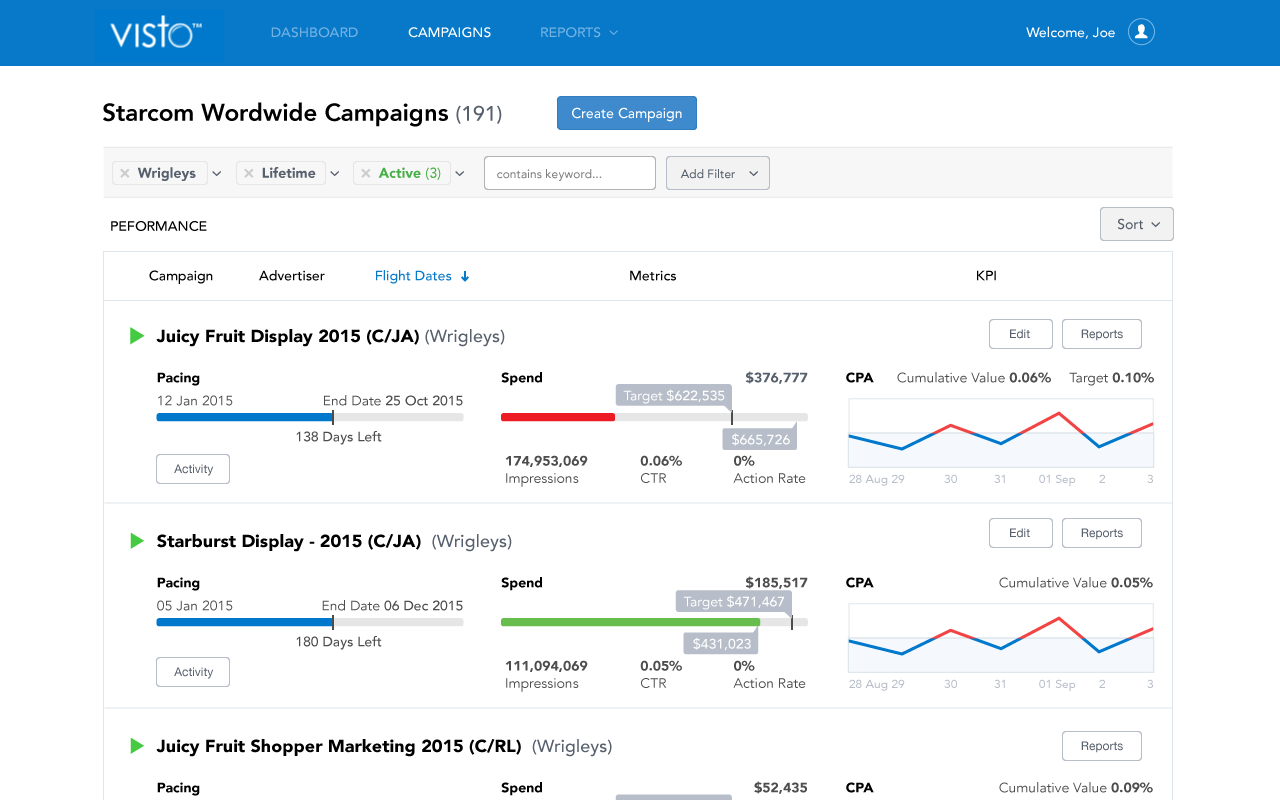
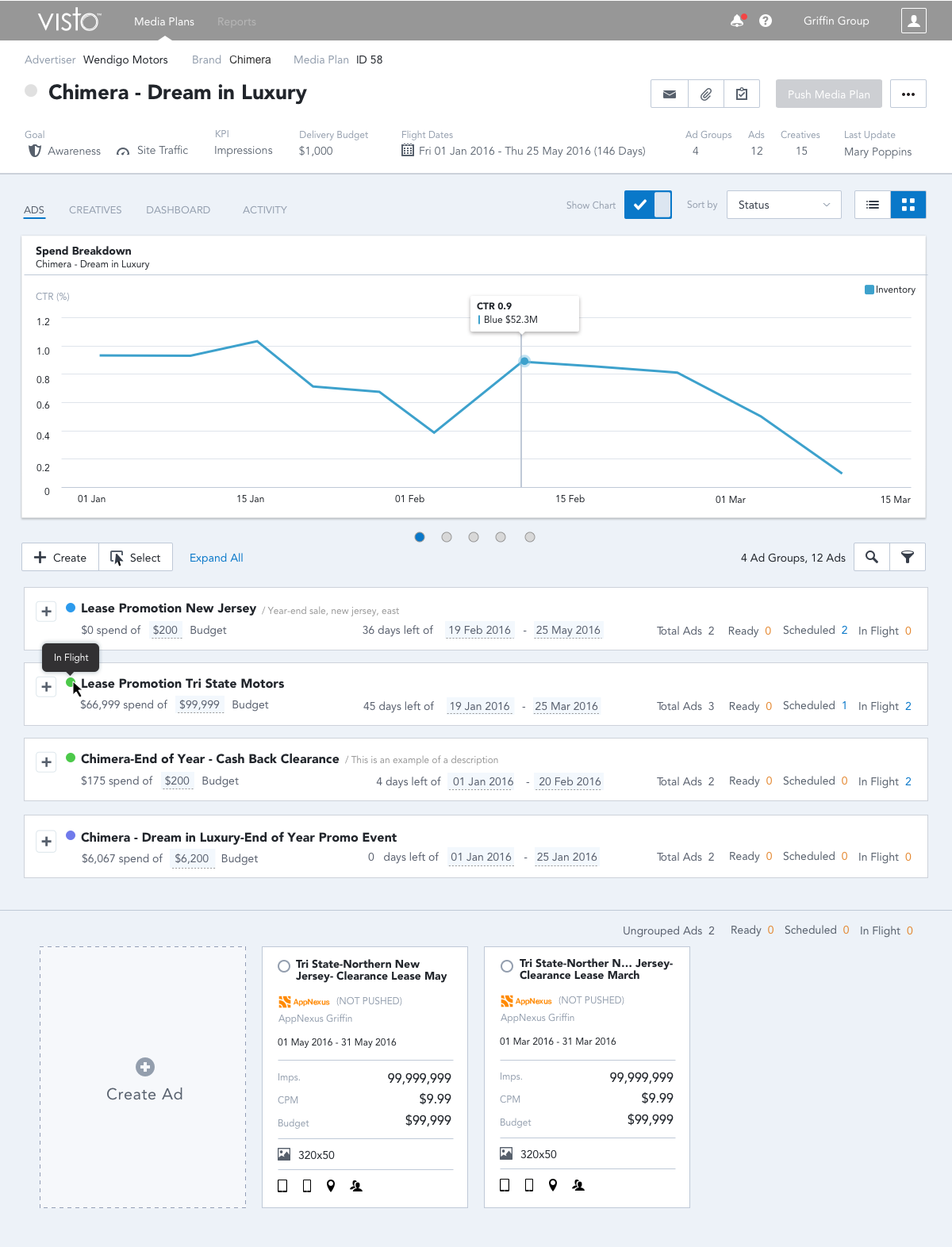
One of the primary challenges for Ad Ops is being able to quickly identify the status of campaigns, including what is currently active, what has been completed, and what is upcoming. It is also critical for Ad Ops to have visibility into which campaigns are underperforming or overperforming, so they can take the necessary steps to optimize them and meet their goals.
To address this challenge, we could develop a dashboard that provides real-time campaign data, allowing Ad Ops to easily track the status and performance of their campaigns. This dashboard could include key metrics such as impressions, click-through rates, conversions, and cost per acquisition, organized by campaign, ad set, or ad creative.
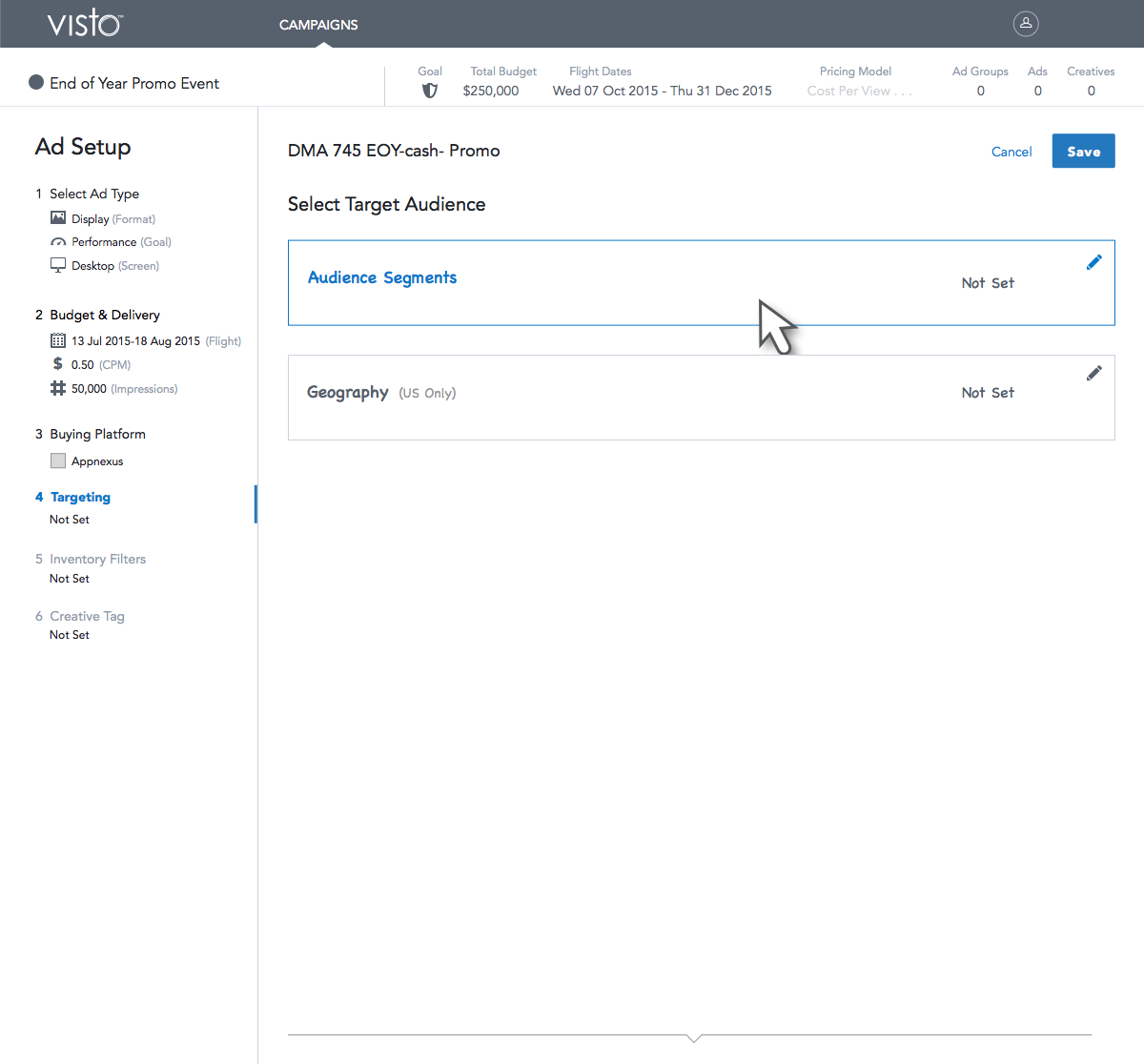
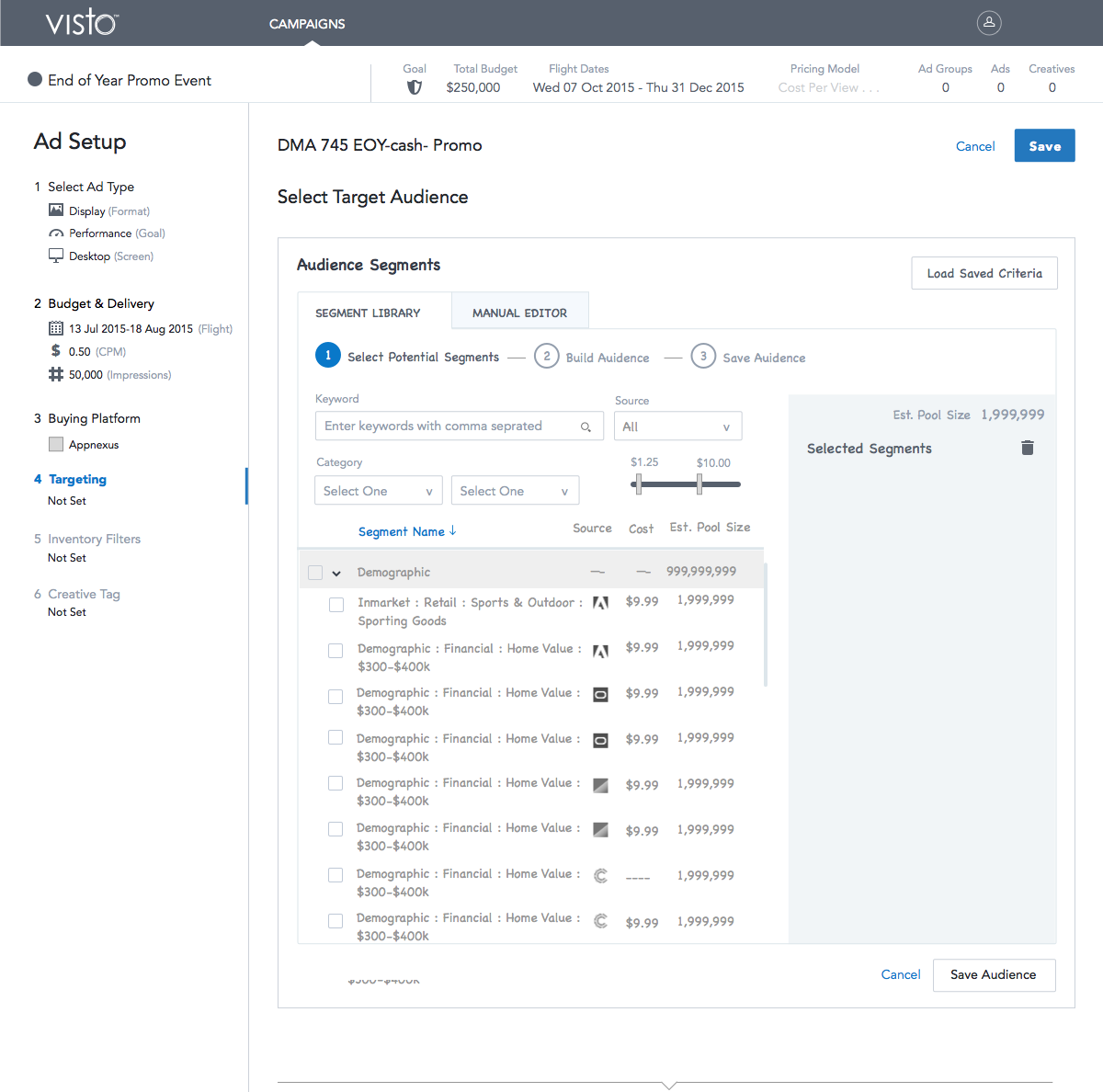
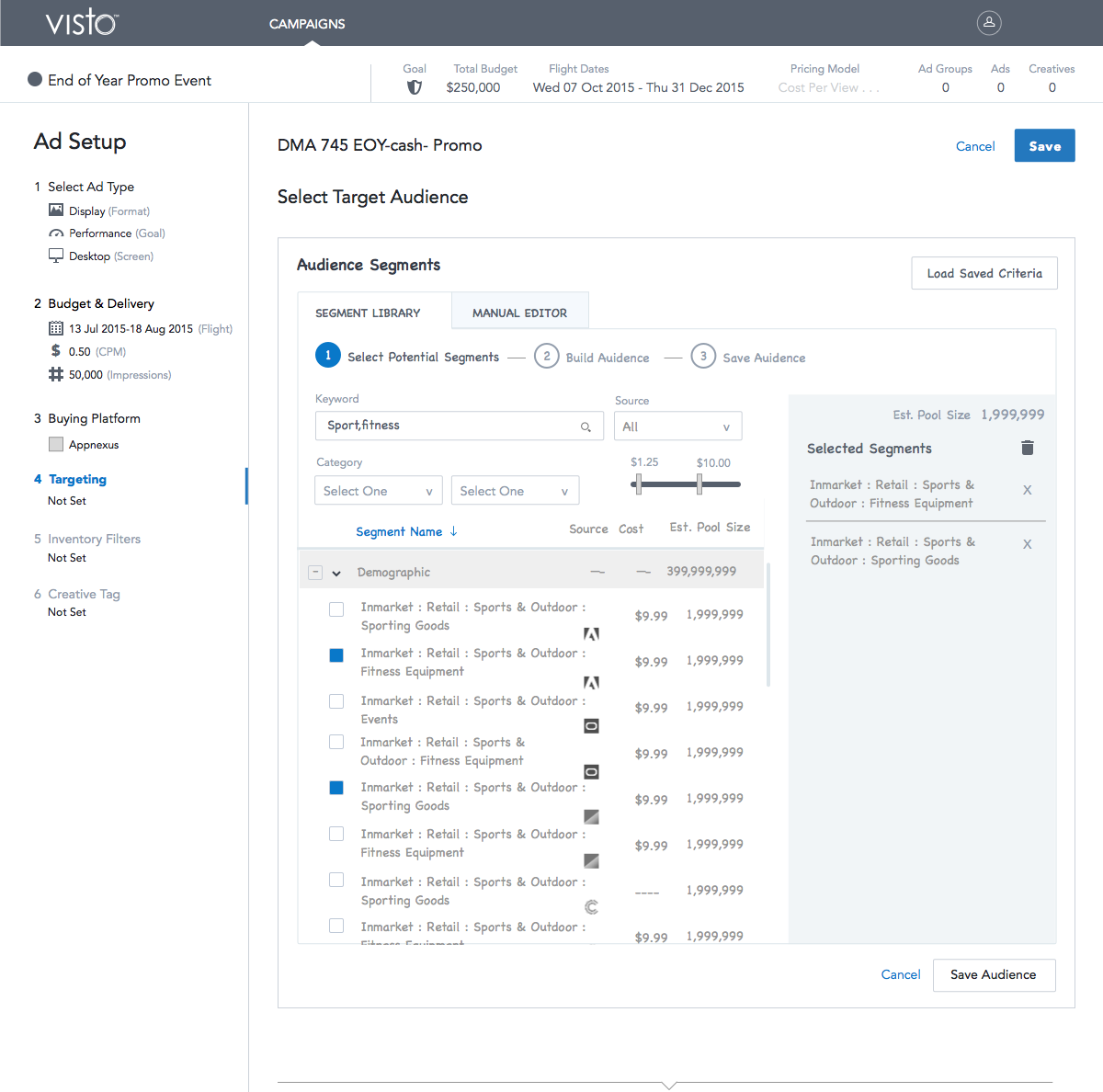
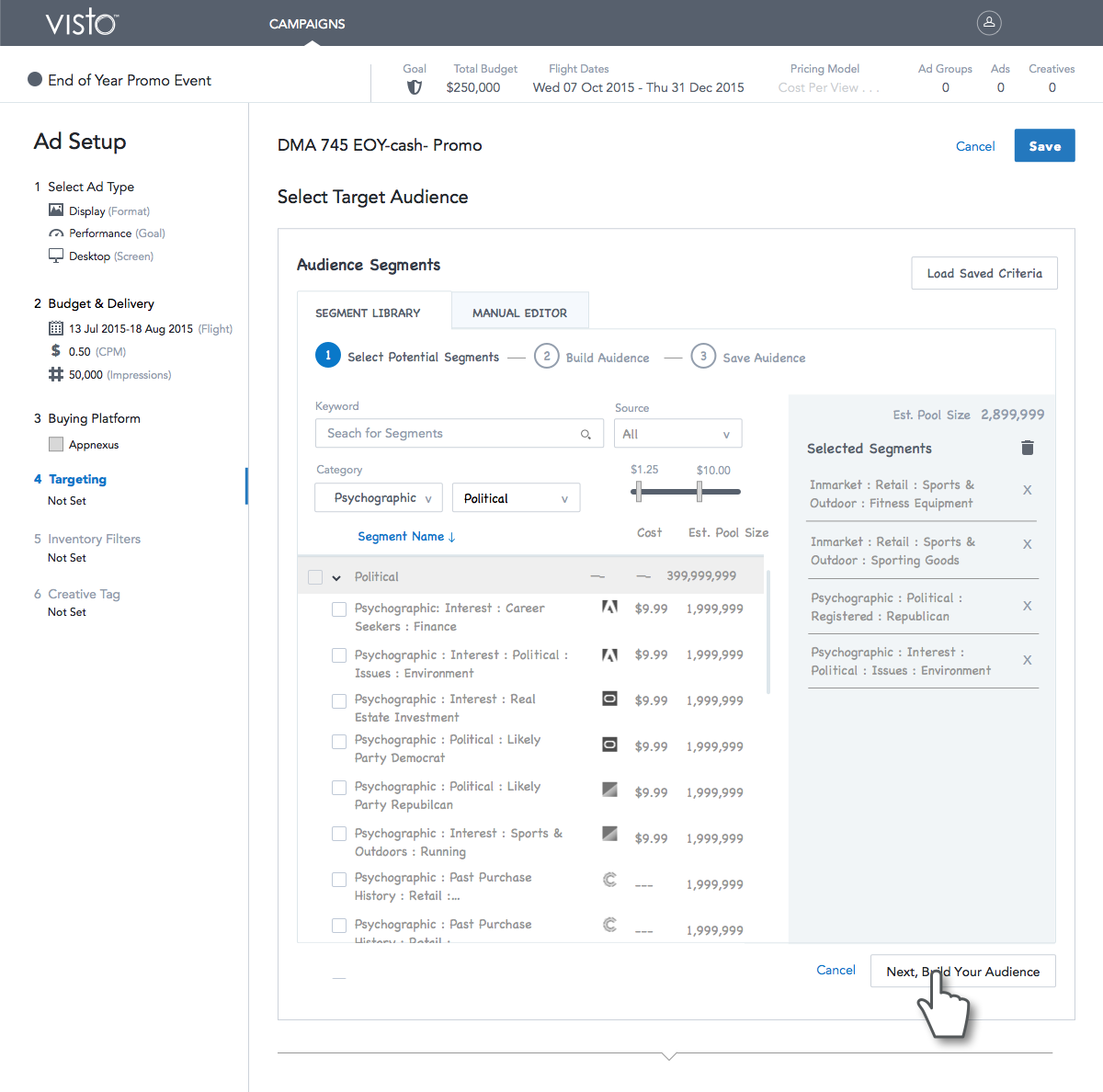
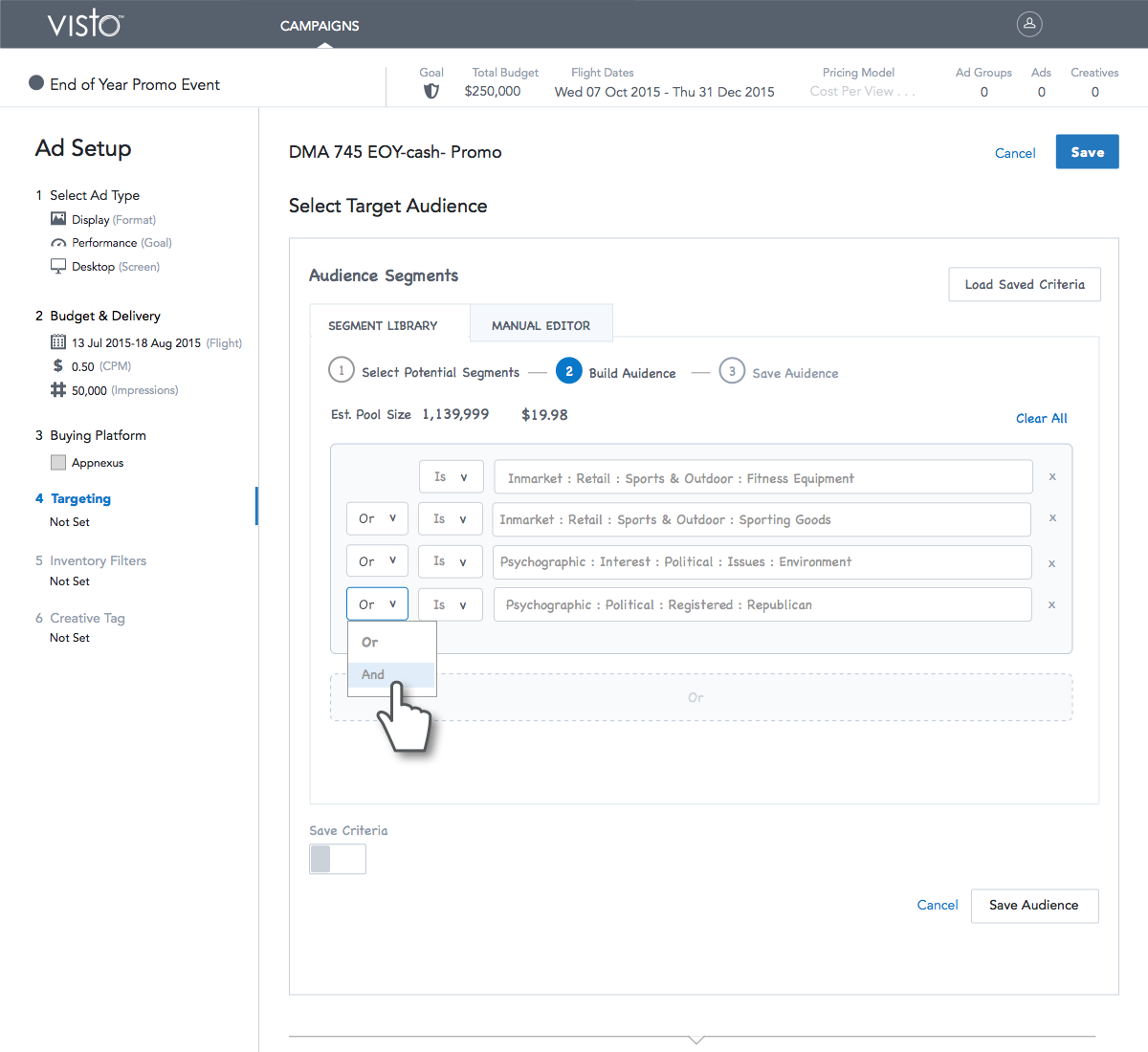
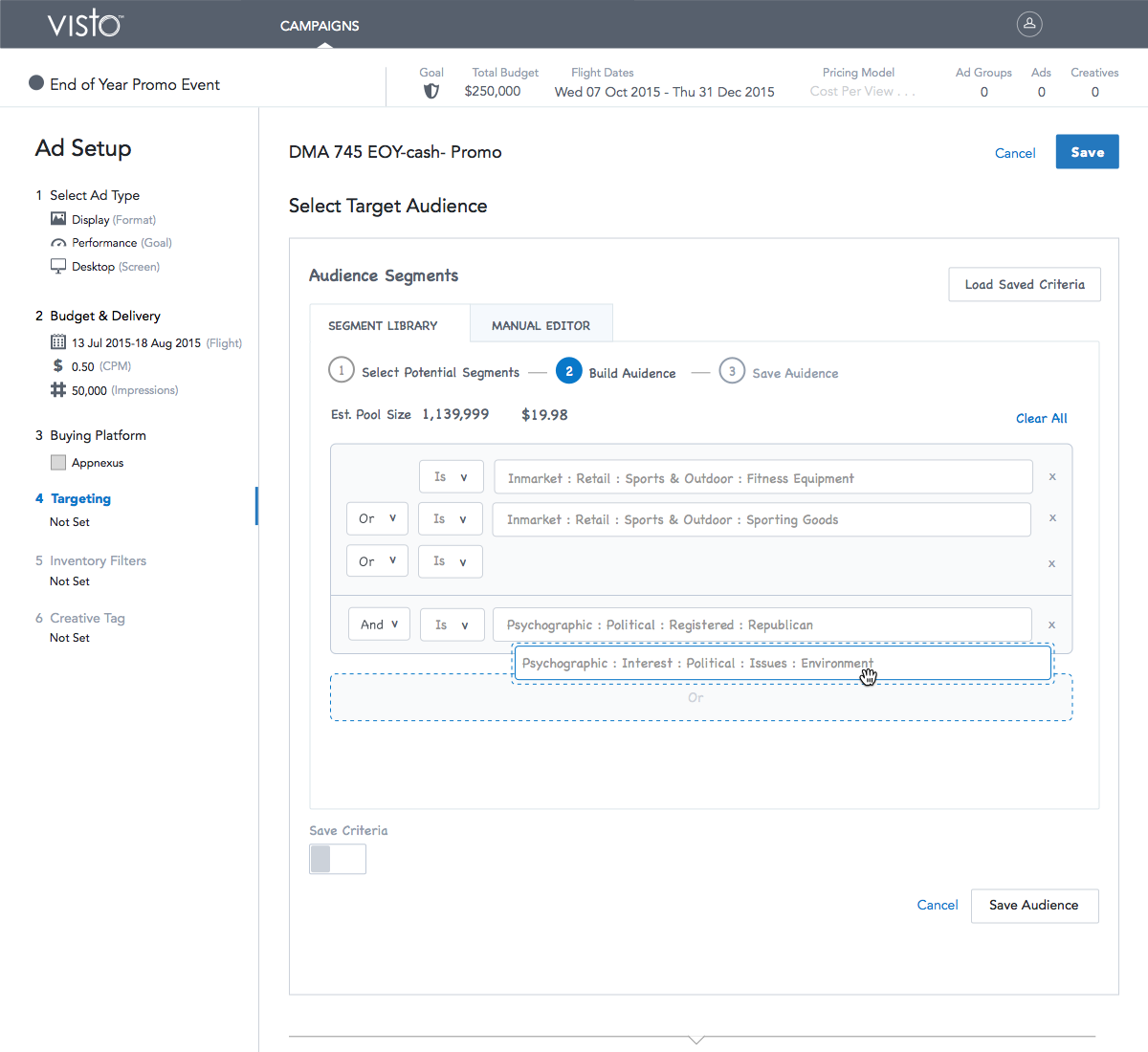
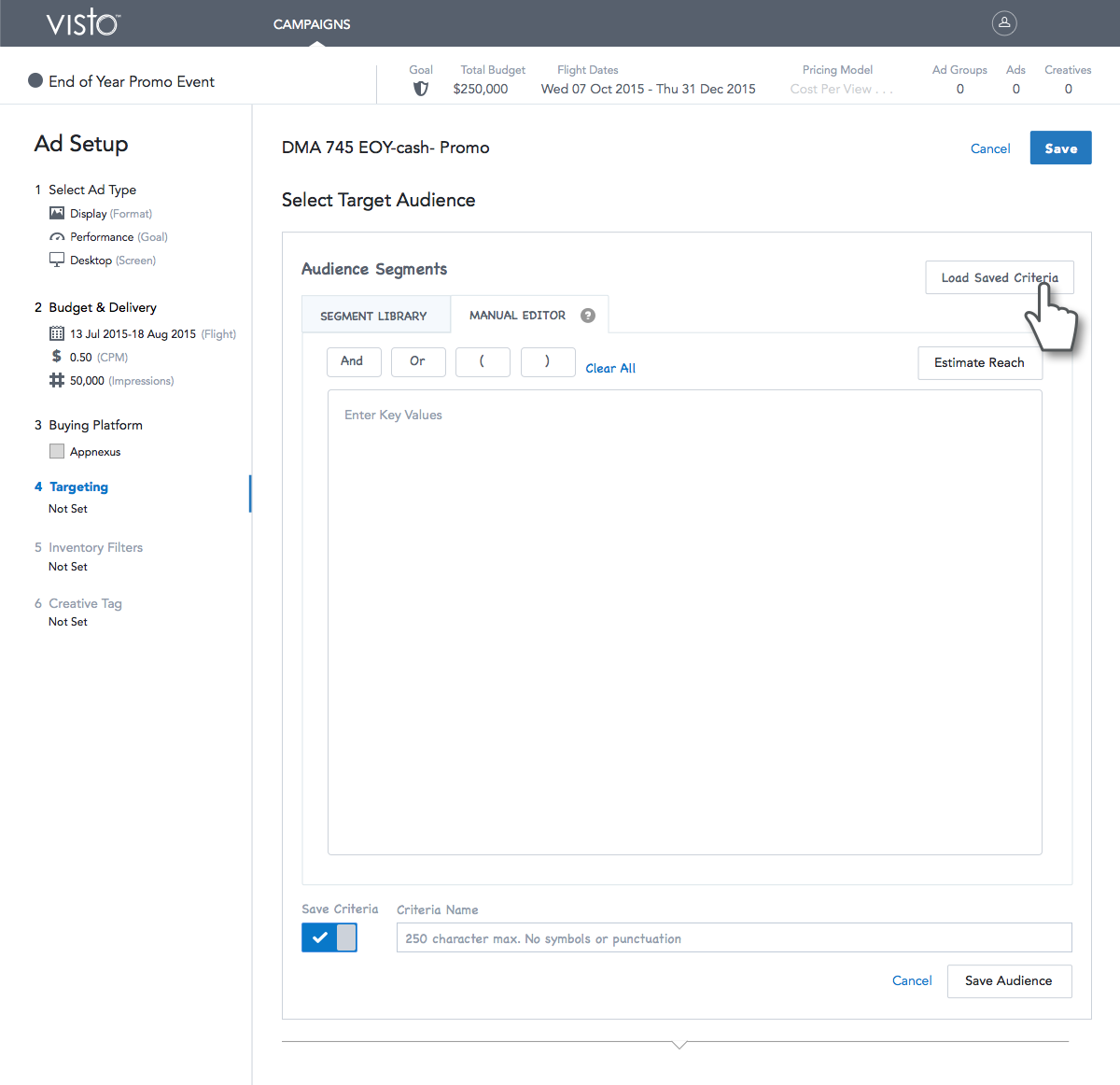
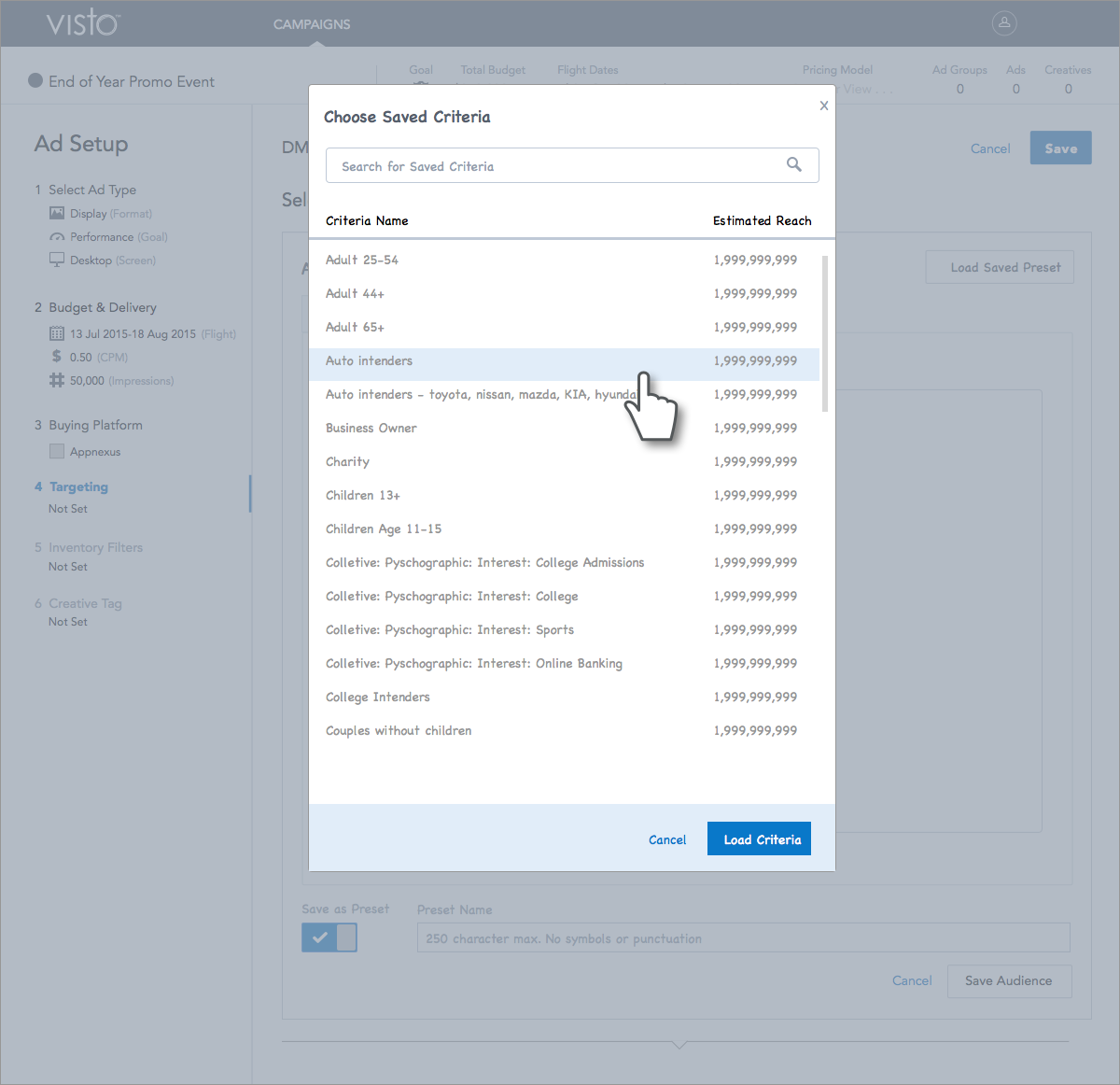
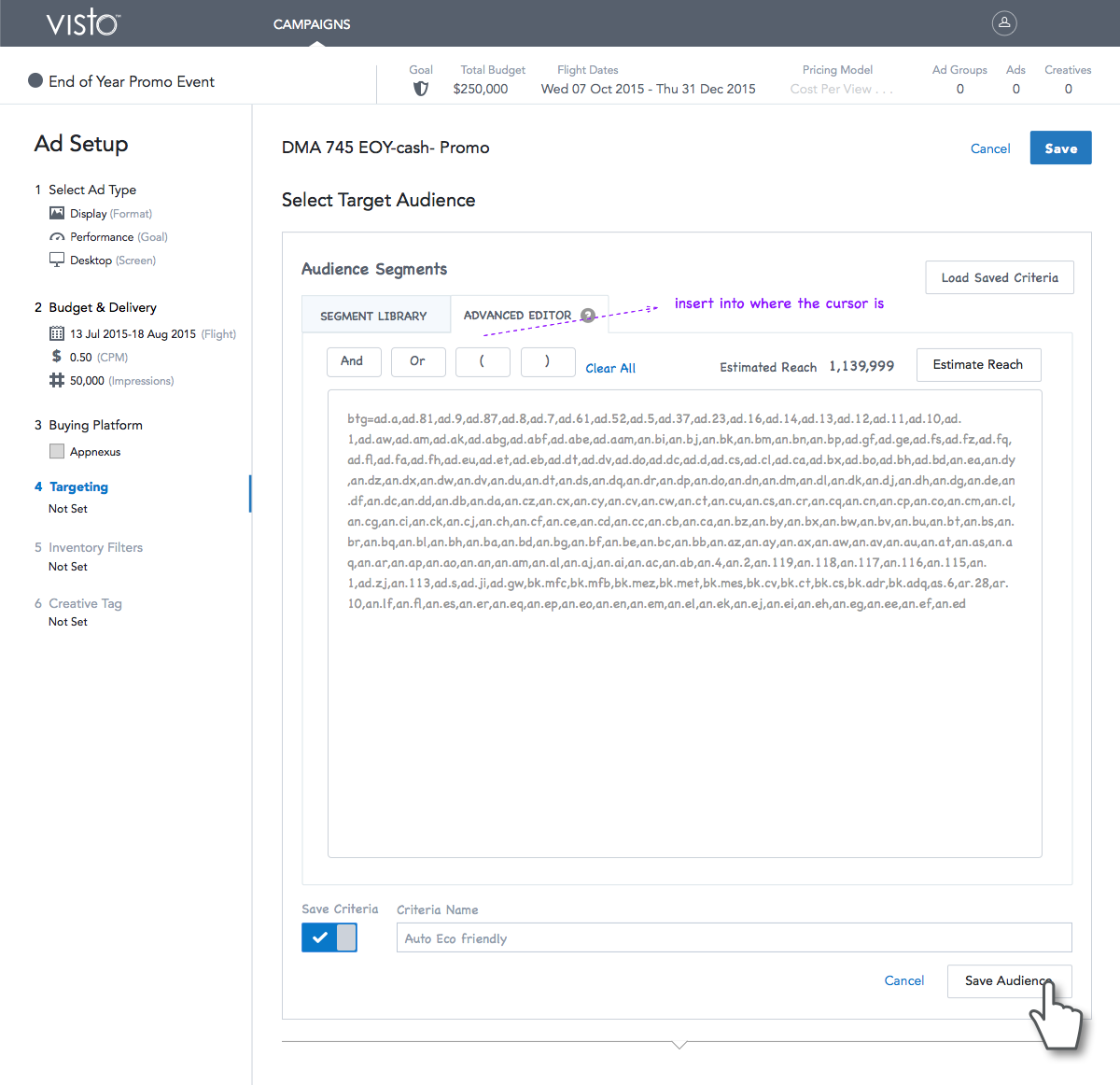
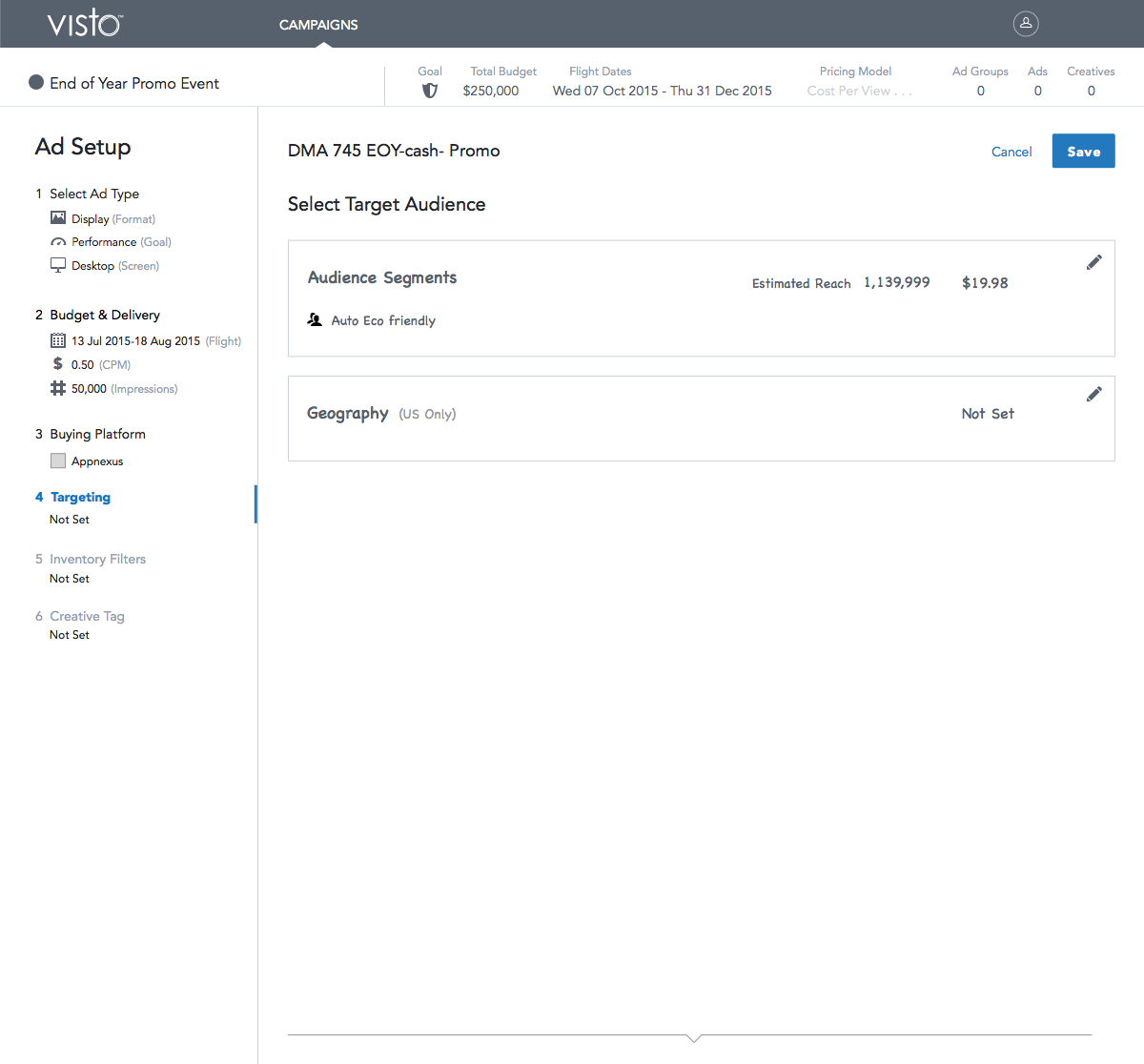
Targeting Rules
Targeting setup can vary greatly between different platforms, which can be a challenge for Ad Ops. To address this challenge, we can identify the most commonly shared targeting settings and provide users with the flexibility to set up more granular details based on the selected platform.
The goal would be to provide a streamlined and user-friendly targeting setup experience that meets the needs of Ad Ops across different platforms.
REAL-TIME REPORTING
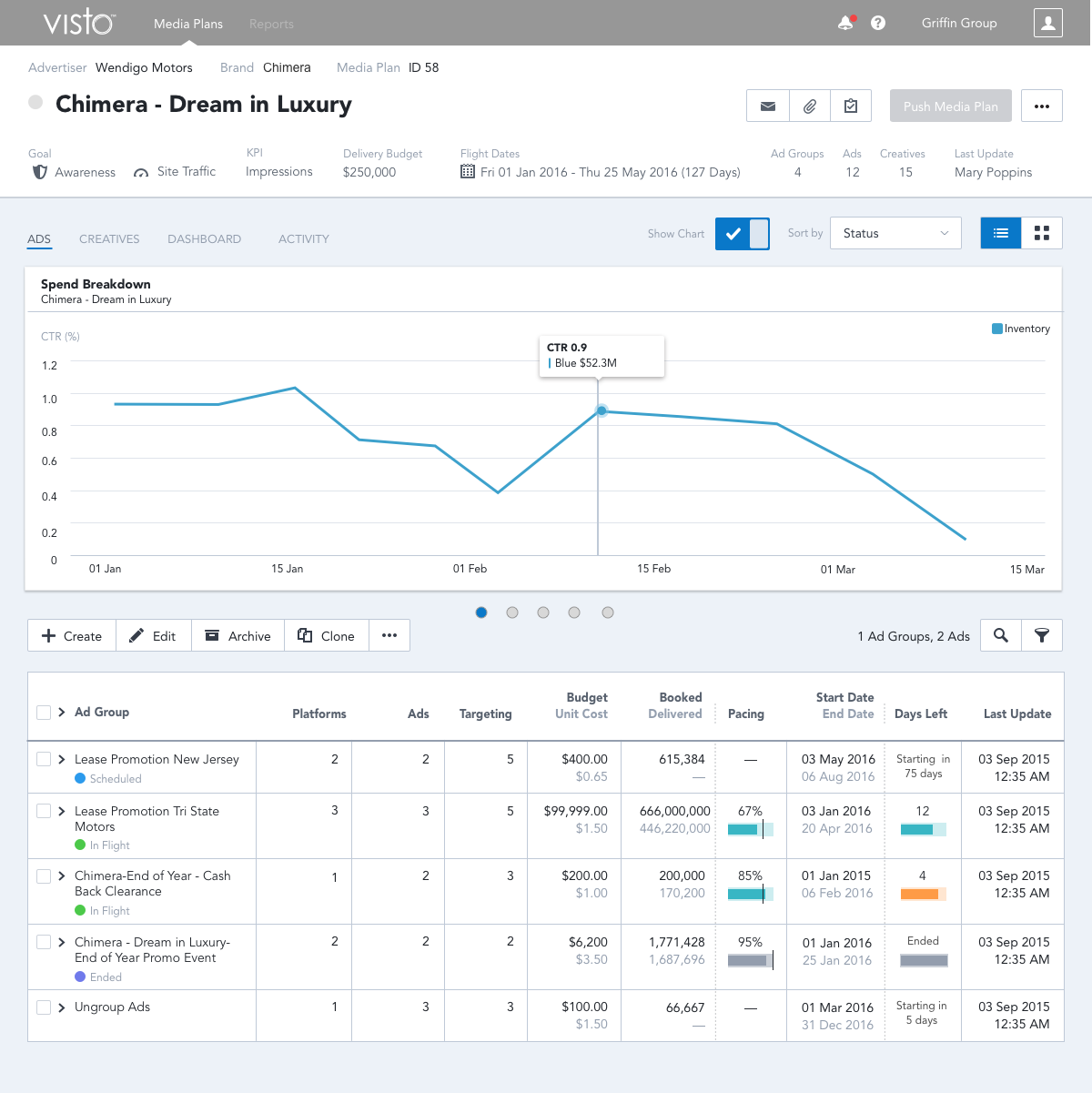
Real-time reporting is crucial for Ad Ops to quickly identify problematic ad campaigns and optimize their ad delivery to meet their targets while staying within budget.
By providing Ad Ops with a bird’s eye view of their budget and spending, as well as performance data over time, they can quickly assess the effectiveness of their campaigns and identify areas for improvement. They can also drill down into individual ad creations to gain insights into their performance and take action to optimize them for better targeting and delivery.
Overall, the real-time reporting provides Ad Ops with the necessary information to make informed decisions and take action to improve their campaigns’ performance. It allows them to stay ahead of the curve in the fast-paced world of ad buying, while ensuring that they are maximizing their budget and achieving their goals.