


Following the launch of Opal, our AI technology last year, we finalized and documented our design guiding principles to ensure a consistent and thoughtful experience for our users across our products. As we know, with the rapid growth of AI capabilities, designing for AI-powered experiences has become complex and multifaceted.
Principles
The team has aligned on 4 guiding principles to serve as a foundation for designing effective and ethical AI-driven experiences. These principles are intended to help the team understand best practices and apply them, make informed decisions, and foster creativity while maintaining the focus on user-centric design. Just like our design system, this is a living document that we anticipate will be updated and changed to reflect the new AI era.These principles are meant as guidance, not strict rules. The team should always use their best judgment to determine whether a principle applies to their particular use case.
- Solve real user problems
- Support the new mental model
- Provide appropriate amount of trust and reliance
- Put humans in charge
Solve real-world problems
With the shiny & fancy AI possibilities, we need to remember the core principle of design thinking: solving real user problems. Ask how the AI will improve the user experience and if there are alternative solutions without AI. Generative AI can be powerful, but it should never overshadow user-centered design.Always:
Prioritize user needs and pain points.
Consider these questions when evaluating potential AI solutions, especially if you’re concerned about using AI just for the sake of using it:
- “What problem are we trying to solve?”
- “How will AI enhance the user experience?”
- “Are there other non-AI solutions that work just as well?”
Test and monitor
After adding AI features, track usage data to see if they help users. Use this info to improve the design and make sure the AI helps users.Design with responsibility
Think about the long-term impact of AI features. Weigh the business value and user needs carefully. Using AI for upsells might seem good for business, but too much can harm trust and won’t likely increase AI adoption.
Show that AI is present
AI should support the user’s workflow, not be the main action. It should be noticeable but not overpower important actions. Opal’s design language subtly highlights AI actions without overpowering the main ones.
Support the new mental model
Users can now interact with computers using natural language to describe their desired outcomes. This opens up many opportunities but requires thoughtful designs that guide users to apply this new mental model. This enables the AI to create the most desirable results.
Suggest prompts
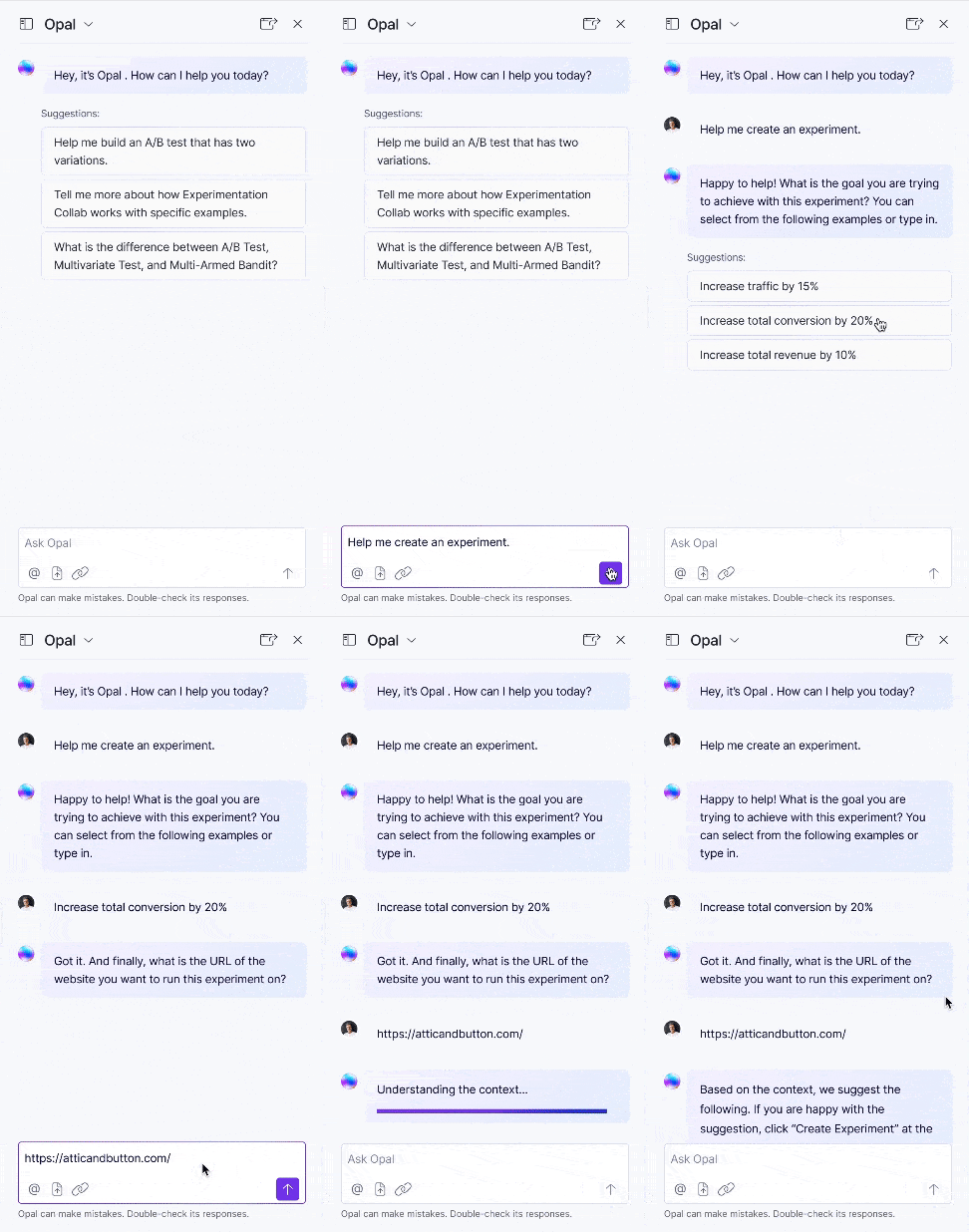
For open-ended interactions like chat, consider suggesting FAQs to users as a starting point. To create these suggestions, find the most frequently asked questions on relevant pages through user research. Once the feature is live, analyze data to find common user prompts.
Highlight how AI can help in the current situation
Consider offering contextual prompts with relevant suggestions to users. But, make sure the guidance is helpful and not annoying. Use data analysis to identify sections with low usage and provide additional guidance there. This can improve user experience and increase engagement.
Ask follow-up questions
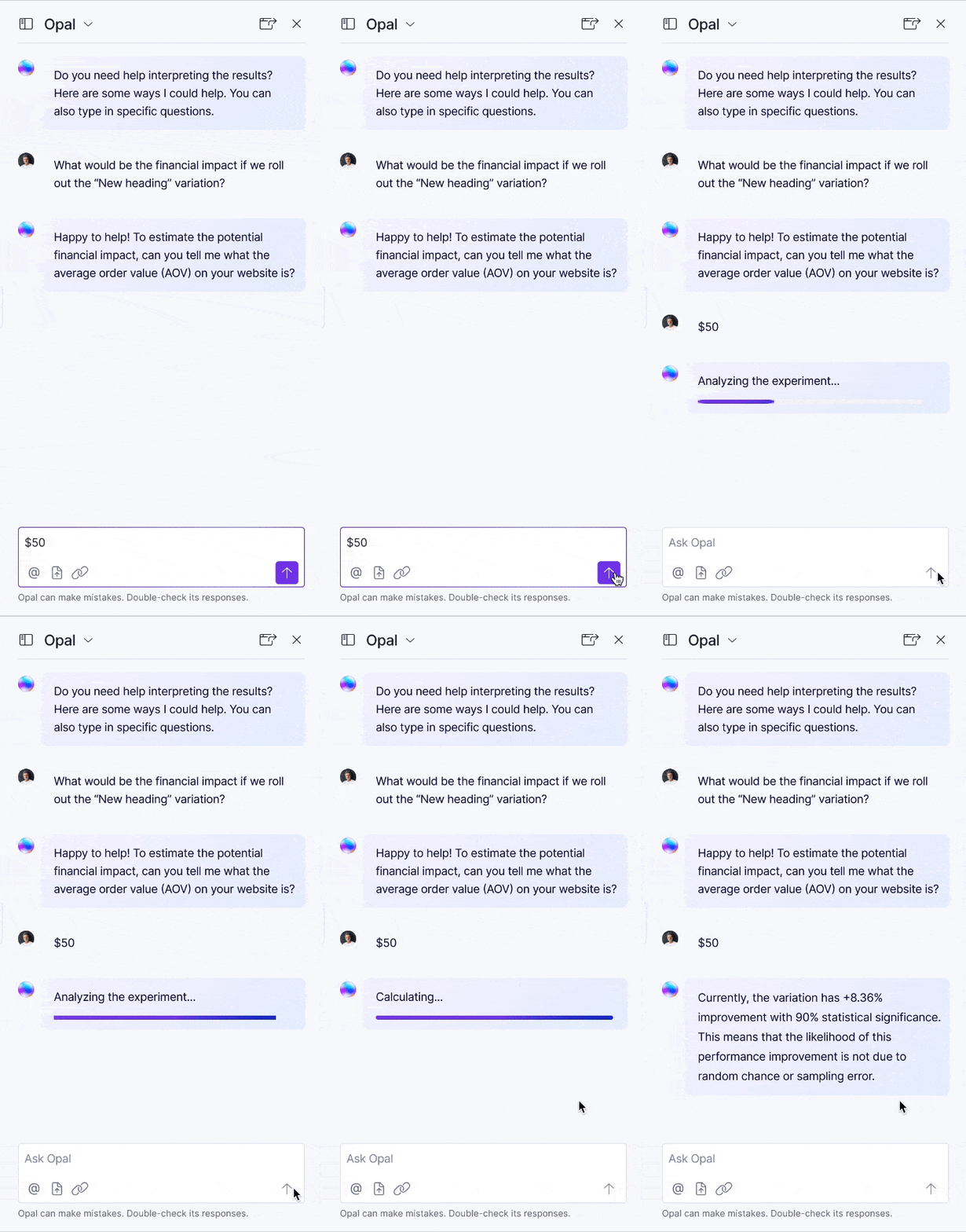
For chat interactions with unpredictable prompts, the AI should be able to ask clarifying questions to gather more information and provide high-quality results, even with short or limited prompts.
Provide trust and reliance
Trust is key when designing experiences with generative AI. Users must feel confident in the AI’s abilities and output. To build trust, create transparent experiences where users can understand and predict the AI’s behavior.Reliance is important because it determines how much users depend on AI. Over-reliance can lead to underutilizing human skills and negative outcomes, while under-reliance means AI’s potential isn’t fully used.There are several reasons why users may under-rely on AI, such as usability issues, not solving the right problem, or not providing enough guidance for optimal usage.To minimize this risk, conduct user research and understand the problem before implementation. If under-reliance persists, investigate further to find the root cause.
Give sources
Including sources boosts trust by making information transparent. Users can evaluate credibility and dive deeper if they want to. This shows the AI’s accountability and helps users understand its reasoning.
Let people know AI can make mistakes, and they should think critically
We can build trust, critical thinking, and reduce over-reliance by admitting AI errors and urging users to verify their work. This openness sets realistic expectations, helps users spot issues, and lets them make informed decisions when using AI.
Be aware of the context
Context is key for building trust in AI. It helps AI understand user intent and provide relevant, accurate, and helpful responses. Without context, AI responses can be generic or misleading, leading to frustration and less reliance.
Alternatively, start Opal with an open-ended question and provide follow-ups if the AI doesn’t understand context.
Show response progress
Show progress when AI responds to user prompts, similar to file upload progress.
When giving text-based responses, consider streaming the text word by word to simulate AI typing.
Put Humans In Control
While AI can create drafts or starting points, users should make the final decision. This helps avoid over-reliance and gives users more control. At the end of the day, we want to leverage the power of AI to do the heavy lifting so that humans can focus on what they should be focusing on: their creativity & strategy!
Allow users to improve AI’s response by regeneration/refinement
Users can regenerate or refine AI responses if they’re not satisfied. This lets them explore different ideas or tweak the response until it’s perfect.
Let users give feedback
Providing rating options lets users control the AI’s learning. Their feedback improves future responses.
Offer multiple options
Give users multiple options to choose from. This way, they can pick the direction they want and get the results they need.
Let users set parameters
Help users set parameters like text length, tone, and sentiment. Let users specify these in prompts, but also offer pre-defined options.
Allow editing of generated outputs
Users can edit AI outputs, which lets them think critically about the suggestions and tailor the results to their needs. Iterative editing lets users use the AI’s strengths for inspiration and exploration while ensuring the final product reflects their voice.
As AI keeps evolving at a breakneck pace, our design team needs to stay close and sharp. We should constantly check how our decisions are panning out and make changes when necessary. These principles are our compass, helping us craft AI experiences that are top-notch while keeping users’ needs front and center. By sticking to these guidelines, Opal can set the bar for AI design that’s both ethical and effective. We’re aiming to create meaningful connections with users that’ll stand the test of time.